
Baden has a reputation to carry: Germany's warm south, the third largest wine region in the country, ripeness and power in the glass. Drive to its south western tip, to the western shore of Lake Constance, and almost none of that holds. Weingut Rebholz farms vineyards close to 500 metres above sea level, in one of the rainiest wine growing areas in Germany, a few kilometres from the Swiss border. Harvest here starts around three weeks after the Kaiserstuhl.
Klaus Rebholz and I had spoken on the phone often enough, but never met. Trade fairs and international markets have not been part of this estate's story so far, which is one of the reasons the conversation was worth having, and one of the reasons the winery will be pouring in Copenhagen in January.
We are way behind our colleagues from the Kaiserstuhl. We have a lot more rain, and our vineyards are among the highest in Germany. The combination is really special.
Klaus RebholzA Volcano, a Planting Right and 0.3 Hectares
The estate is young, just over two decades old, which in wine terms, as Klaus puts it, makes it a newborn baby. His father started it in 2002, and almost by coincidence. In Germany you cannot simply plant vines, you need a planting right, and he found that there was one to be had on the Galgenberg near Bohlingen, an old volcanic vent in the Hegau. He planted 0.3 hectares of Pinot Noir, and he planted every vine of it himself.
Convincing the authorities took some doing, even though the hill had a wine history to point at. A map from 1871, now framed at the estate, shows around 20 hectares of vines on the Galgenberg. Phylloxera, war and economics emptied it: by the late 1960s almost nothing was left. The family sees what they are doing less as a start than as a recultivation.
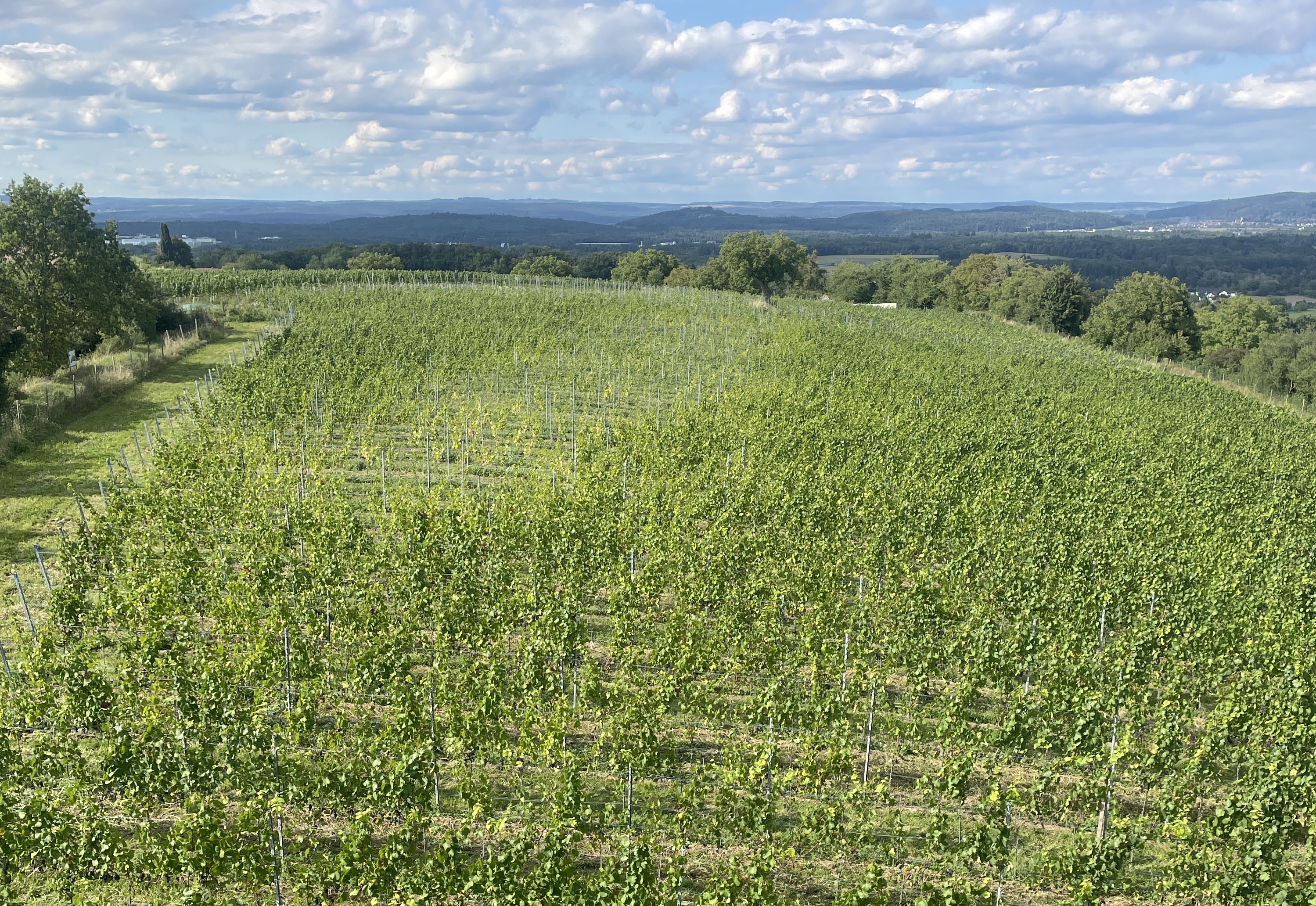
Vine by vine, year by year, the estate grew to eight hectares, mainly on the volcanic tuff of the Galgenberg and on the Höri peninsula, again within sight of Switzerland. Pinot Noir accounts for around 60 per cent. Chardonnay, planted heavily over the past five years, is now the second variety, followed by Weissburgunder, Grauburgunder and Müller-Thurgau, the classic grape of the lake.
Cool Climate, in the Warm Region
The numbers do the arguing. Around twice the annual rainfall of the Kaiserstuhl, 150 litres in the two days before our visit alone. Vineyards at close to 500 metres, among the highest in Germany, roughly 100 metres above the lake and two kilometres from the water. A wind that runs over the hill, dries the grapes and cools them through the night, late into the harvest.
Baden is one region on paper, but Markgräflerland, Kaiserstuhl, Breisgau and the lake have little in common. Culturally, Klaus points out, the lake is closer to Switzerland and Austria than to the rest of Baden, dialect included. Warming has helped here rather than hurt: the ripeness they once envied further north west now arrives on its own, while the altitude and the rain keep the acidity in place.
We are still benefiting from the temperature increase. We get the maturity we were enviously looking for, and we are not overchallenged by it yet.
Klaus RebholzThe First Chardonnay
The first wine in the glass was the 2023 Chardonnay vom Vulkan, the estate's first Chardonnay, from sélection massale material out of Burgundy. The winemaking is deliberately old fashioned: the grapes are crushed lightly by foot and left in their own juice for a few hours, then pressed as whole clusters. The juice is allowed to oxidise before fermentation, on purpose, so that what would fall out later falls out now. After twelve to fourteen hours of settling it ferments spontaneously in French oak, part of it new, the rest second, third and fourth use, and stays in barrel for twelve months before another five or six months in stainless steel.
What arrives in the glass is the opposite of what the nose promises. There is width and spice and a clear touch of oak, and then a palate that is lean, saline and bright, at 13 per cent alcohol. The freshness is built rather than found: picking earlier than they used to, no chase for overripe golden grapes, spontaneous fermentation, and as little movement of the wine as possible during ageing.
You would assume wood makes the wines broader and fuller. For us the wood keeps the freshness. It does not take it away.
Klaus Rebholz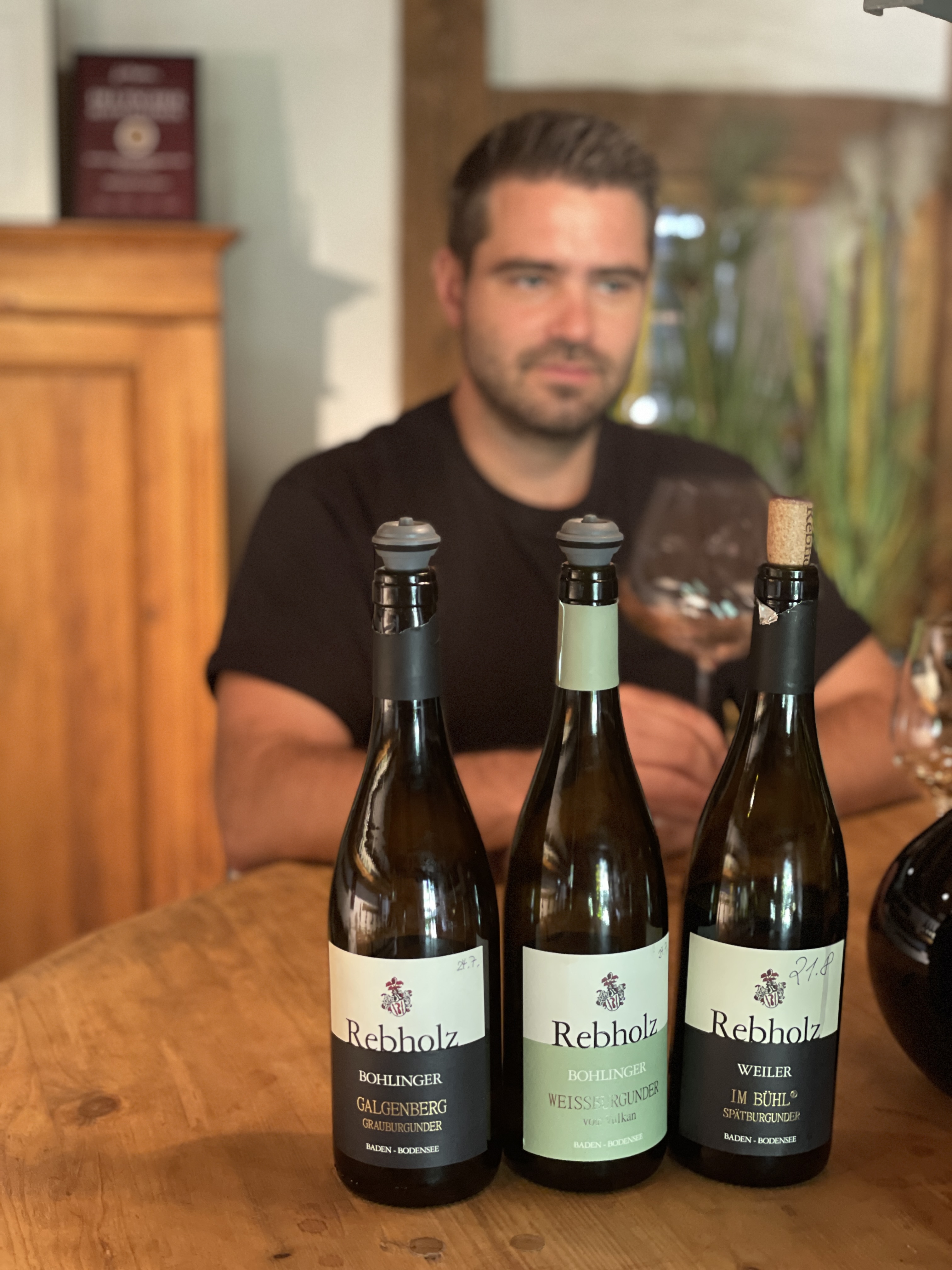
Pinot Noir, and the Patience It Asks For
The Pinot Noir that followed is the estate's flagship, 2023, still entirely from German clones; the Burgundian selections planted over the past three years will join it soon. Depending on the vintage, 20 to 50 per cent of the bunches go in whole. There is a cold soak of five to seven days, then spontaneous fermentation. Over the years the cellar work has shifted from punching down to pumping over, which gives a lighter extraction and a juicier wine.
It shows. There is cherry, then cranberry and sour strawberry, a salty, almost liquorice finish, and acidity that carries all of it. There is also, unmistakably, the floral, fruit forward signature of German clones rather than Dijon material, which is not a flaw but a difference worth naming. The wine is young, probably ten years too young. Learning that took the estate time, and time is the one thing wine does not give back quickly.
The mistakes you discover five years later. By that time five vintages have gone by again.
Klaus RebholzAsked what shaped their style, Klaus gives the honest Burgundy answer first, then corrects it. The wine that opened their eyes came from their own region: the 2010 Hecklinger Schlossberg from Bernhard Huber. He still has one bottle. The producers of Baden who spent thirty years dragging Pinot Noir out of the cooperative shadow, Huber and Franz Keller among them, are role models rather than competitors, and he is careful not to put his own eight hectares in the same sentence as theirs.
On the broader question, he is clear: nobody should be trying to make Burgundy in Baden. German Pinot Noir is still deciding what it is, producer by producer, and that is the more interesting project.
A Name, a Pasta Business and a Plan
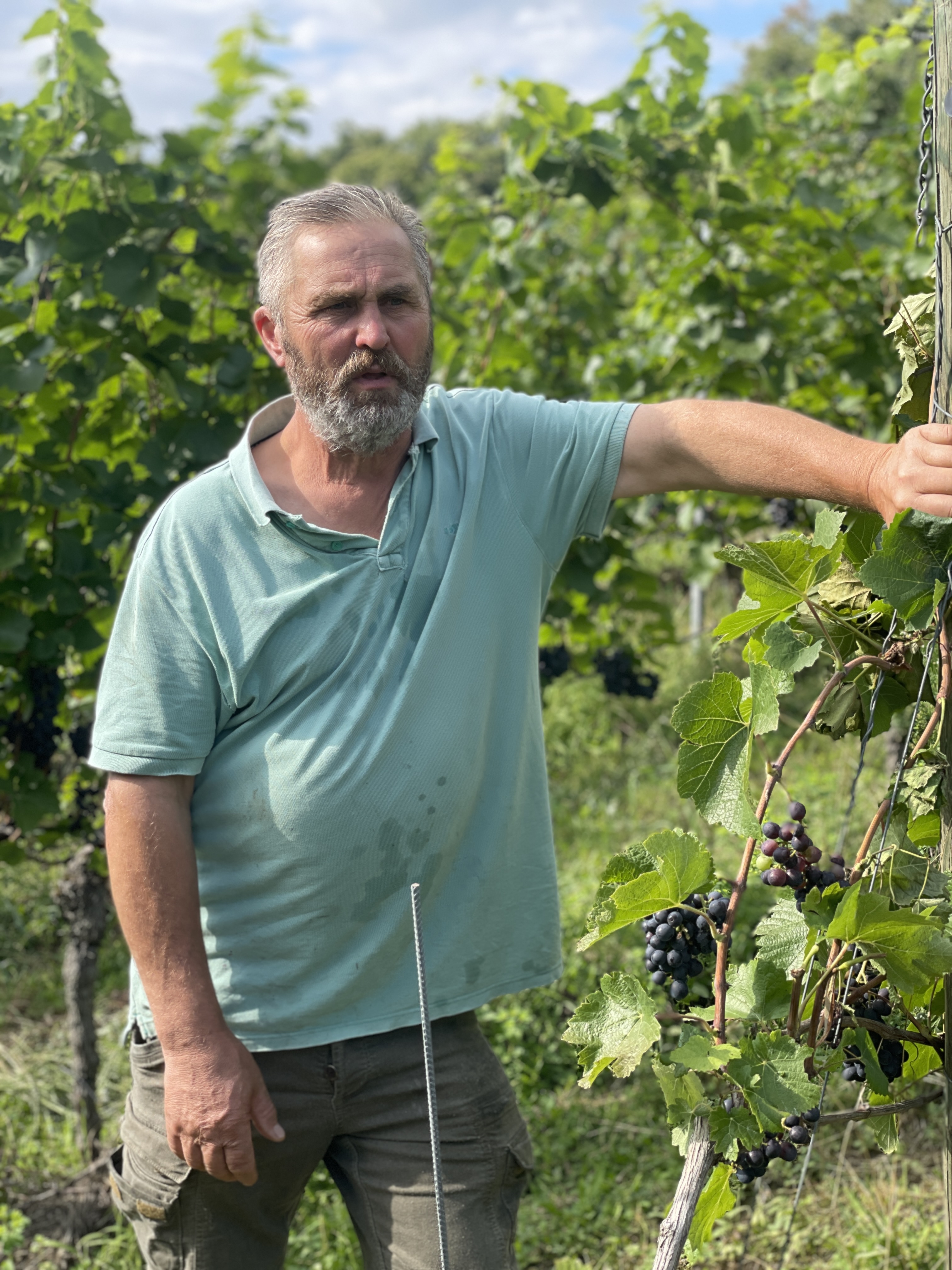
Two things amuse Klaus about his own situation. The first is the name. Rebholz means vine wood, which is a good name for a family that came to wine by accident. There is also a famous Ökonomierat Rebholz in the Pfalz, and no, they are not related, though they know each other. The second is his second job: he works in the pasta business, a consequence of three long stays in Italy during his business studies. Wine and pasta, he says, end up at the same table.
The business degree does not help with harvest planning. Forecasting models, he says, need heavy adjustment when a season can swing from the cold, wet 2021 to the heat of 2018. Nature is both the basis of everything the estate does and the reason nothing can be relied on twice.
Roughly half the wine is sold directly to private customers, about a third to restaurants, the rest through export and specialist shops. So far that means the United Kingdom and Sweden. Five years from now he wants the young vineyards mature and balanced, German and Burgundian clones side by side to choose from, and the wines on tables well beyond the lake.
Weingut Rebholz will be pouring at the Cool Climate Wine Summit in Copenhagen, 17 and 18 January 2027, alongside colleagues from Baden, Graubünden and the rest of the cool climate map. The Chardonnay is worth finding early in the day, while the palate is fresh. The Pinot Noir is worth buying and forgetting for a decade.